 BASISBK165
An AI copilot for cost segregation engineers
Reducing the manual burden of cost segregation without removing the judgment that makes it legally defensible.
- Role
- Co-founder & founding designer
- Timeline
- Fall 2025 · 10 weeks
- Tools
- Figma · Cursor · Lovable
15+
user interviews
across every role in the workflow
4
signed partners
including CSSI
#1
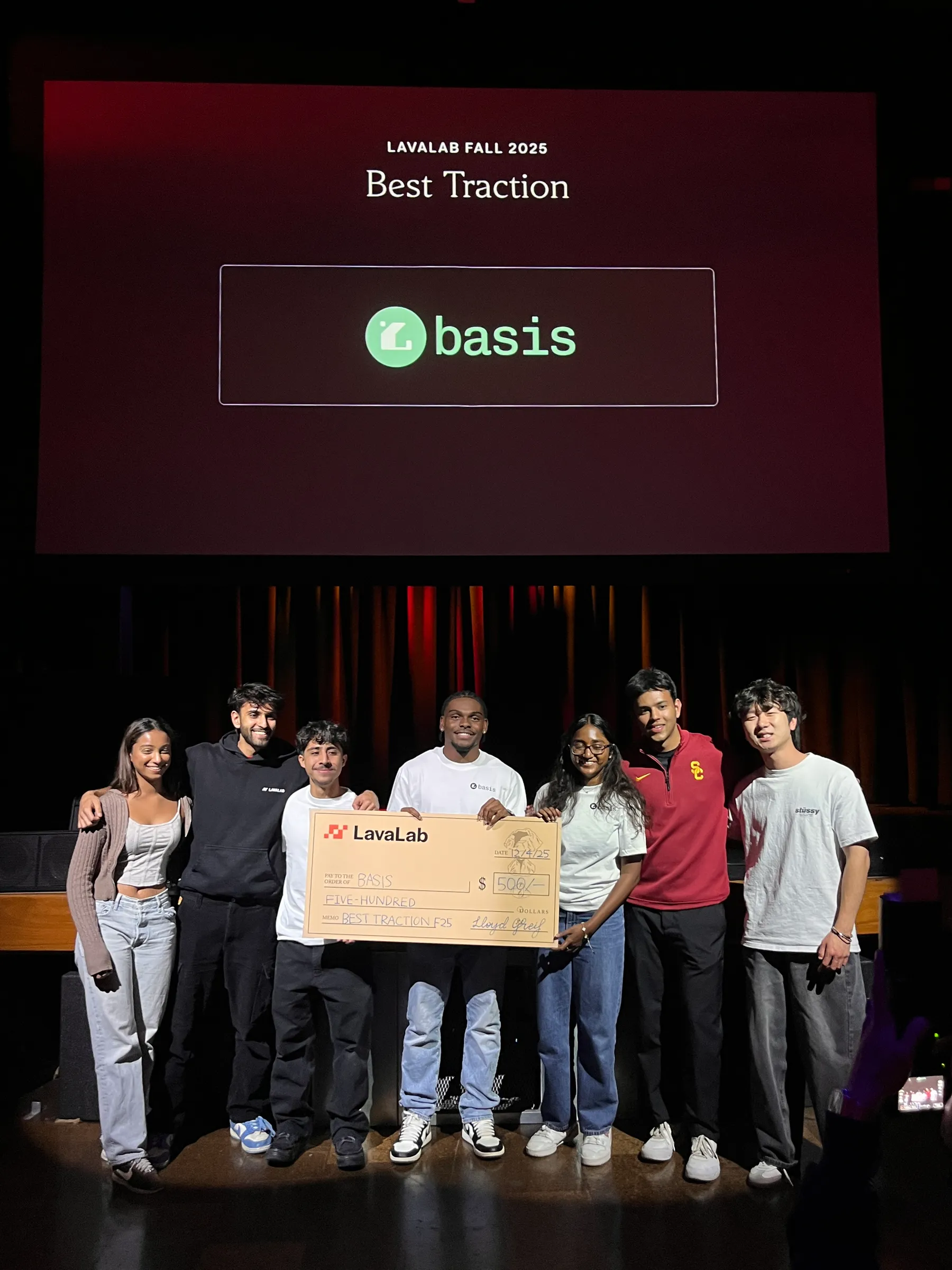
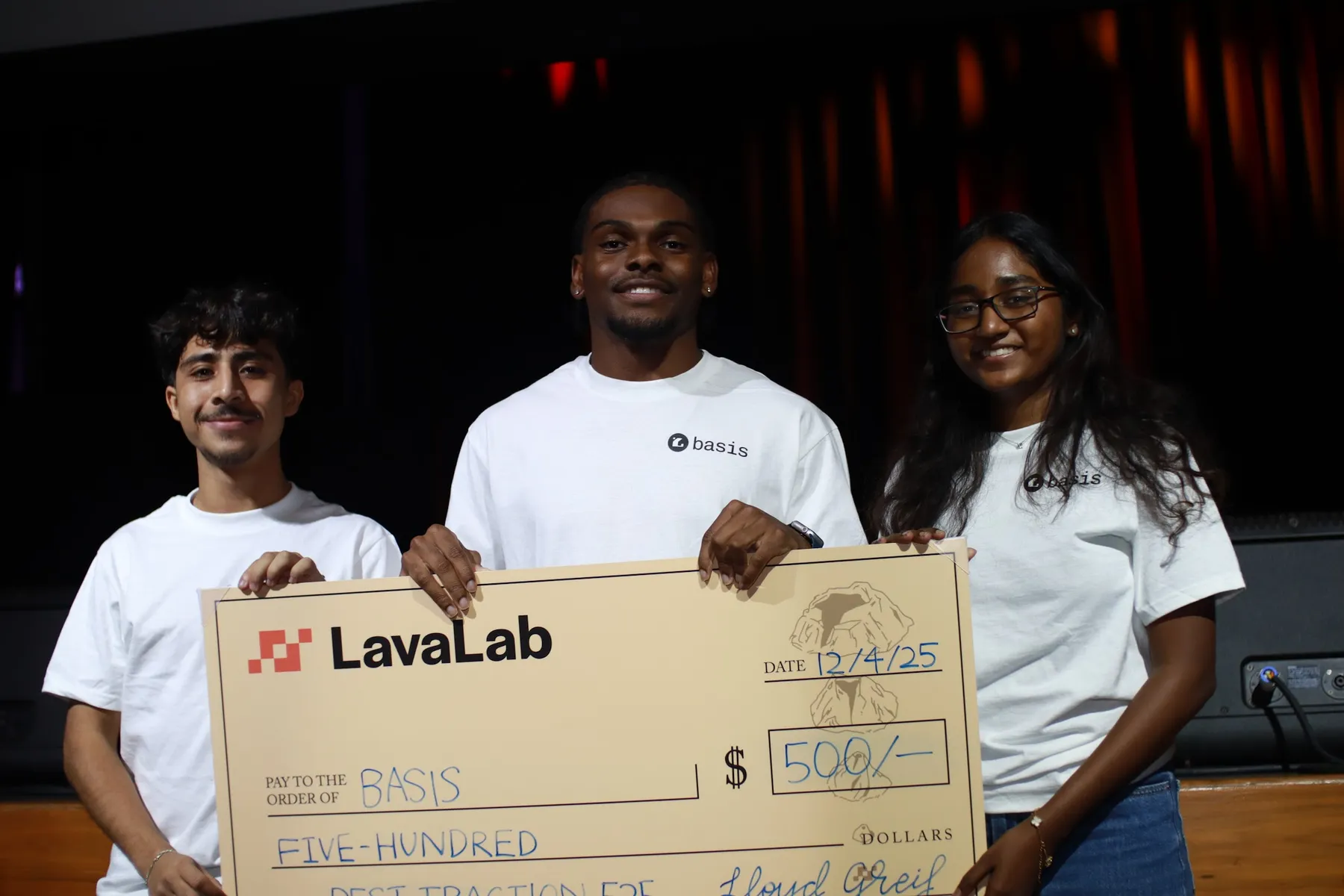
Best Traction
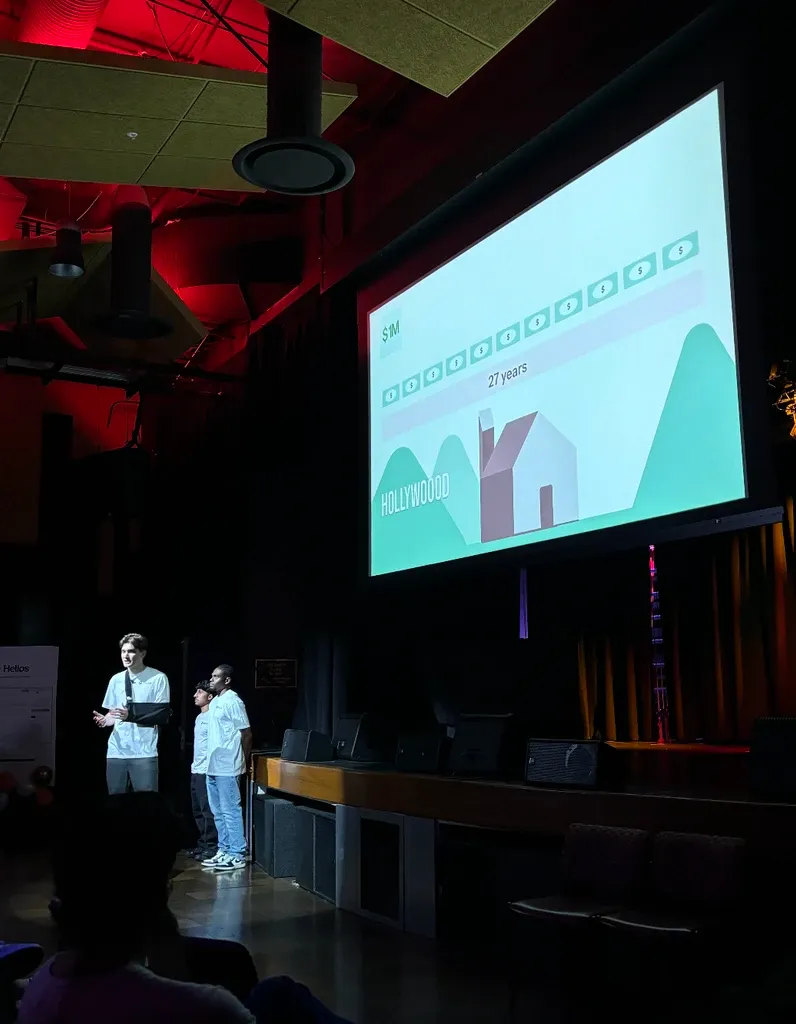
LavaLab F25 pitch competition
4
versions in 6 weeks
each one broke an assumption
Context
Ten weeks to find a problem and solve it.
That is the entire brief at LavaLab, USC's student startup incubator. A co-founder's parent worked in cost segregation, which gave us a direct line to people who do the work every day. We took it.
Problem
A niche tax loophole, an aging workforce, and outdated systems.
Cost segregation only applies in the U.S., and the specialists who do it are retiring with no pipeline behind them. Which leaves the cost of a single study sitting where it is:
2-3 weeks
to complete one study
~$1,200
per residential study
almost all
of it done by hand
- 01
Client onboarding
Receive property info and sign engagement.
- 02
Document collection
Gather blueprints, appraisals, invoices.
No standardized format for docs
- 03
Site visit and photo capture
Photographer captures every room and asset.
Photos unstructured, often mislabeled
- 04
Photo organization
Manually sort, label and match to assets.
An entire job role exists just for this
- 05
Document cross-reference
Validate each asset across 4+ tools.
Tool switching kills focus and time
- 06
Asset classification
Assign a depreciation category per asset.
High ambiguity plus legal liability
- 07
Quality review
Senior engineer checks for IRS defensibility.
Blind review, no source links
- 08
Report generation
Manually compile the client deliverable.
Fully manual, no structured output
- 09
Sign-off and delivery
Licensed professional signs and delivers.
AI legally cannot do this
The biggest constraint being:
Every classification must be IRS-defensible, and a licensed professional legally signs each study. AI cannot.
How might we reduce the manual burden of cost segregation without removing the professional judgment that makes it legally defensible?
Research
We didn't know the intricacies. The people who did told us we had it wrong.
So we asked nearly everyone in the workflow: retired specialists, engineers, photo organizers, sales leads, firm CEOs. Three findings rebuilt the product.
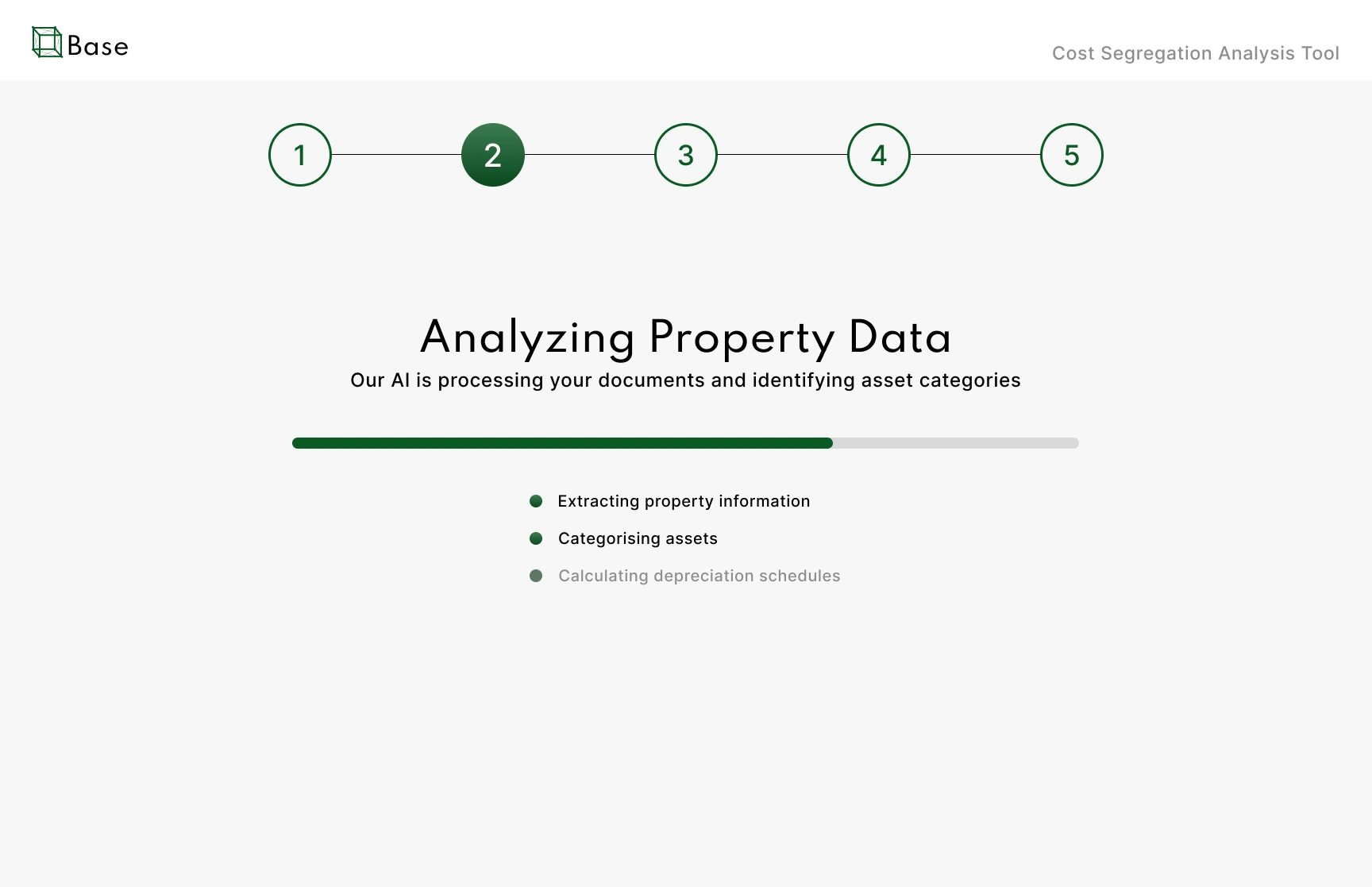
V1 died on contact.
A retired specialist saw our fully automated prototype and killed it in one sentence: too many judgment calls, and a license signs every study. We reframed the product around traceability.
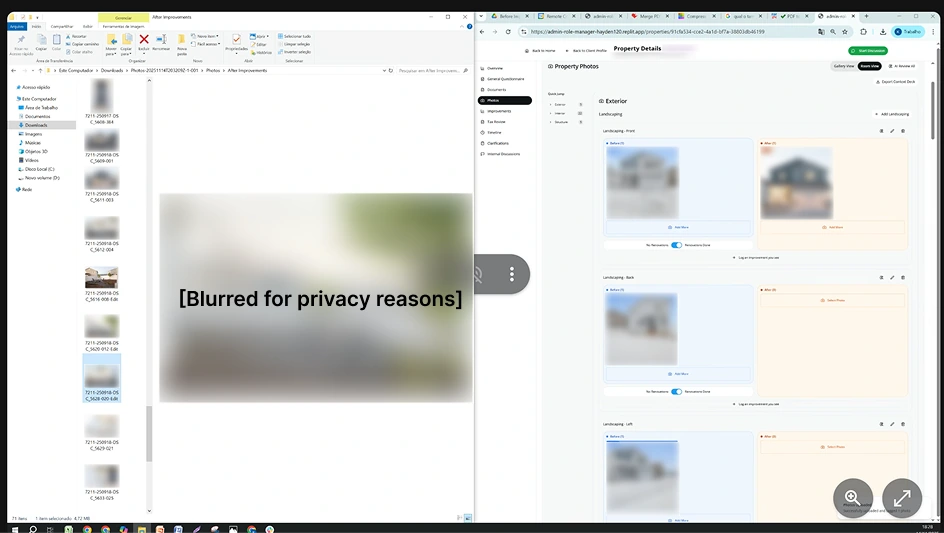
The bottleneck was evidence, not analysis.
Some people's entire job is manually sorting property photos. That finding became the unified document view.
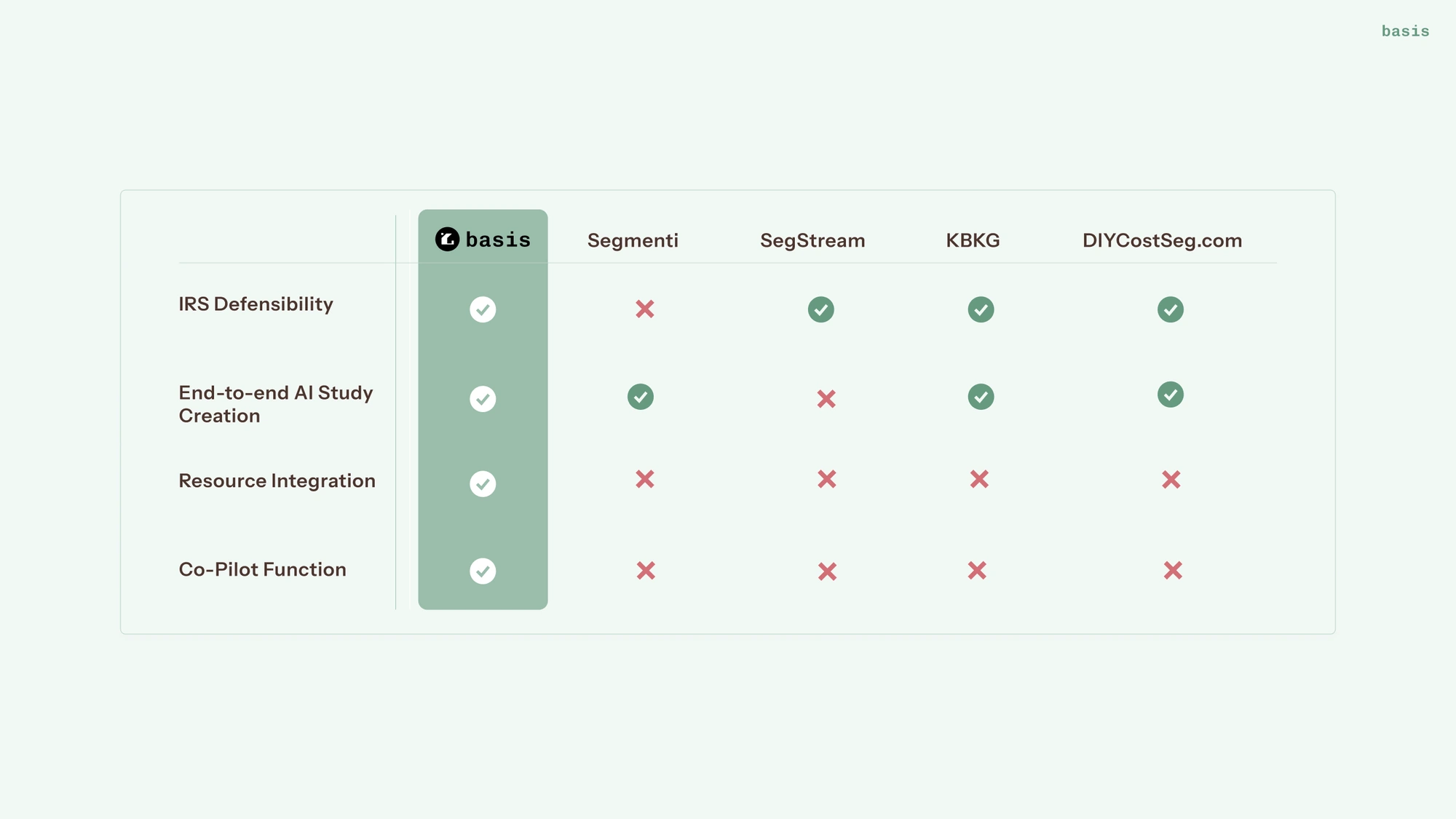
Trust had to be designed, not assumed.
Engineers feared replacement, firms feared data leaks. SegStream is dense with no AI, Segmenti is AI with no human review. Override and approval became prominent by design.
Engineers needed to see that Basis made them better at their job, not redundant.
Iterations
Design wasn't done in Figma. We prototyped fast, tested, and broke our own assumptions.
Four versions in six weeks. Each one was built, put in front of real engineers, and broken in ways we did not expect. Two features took the most rework.
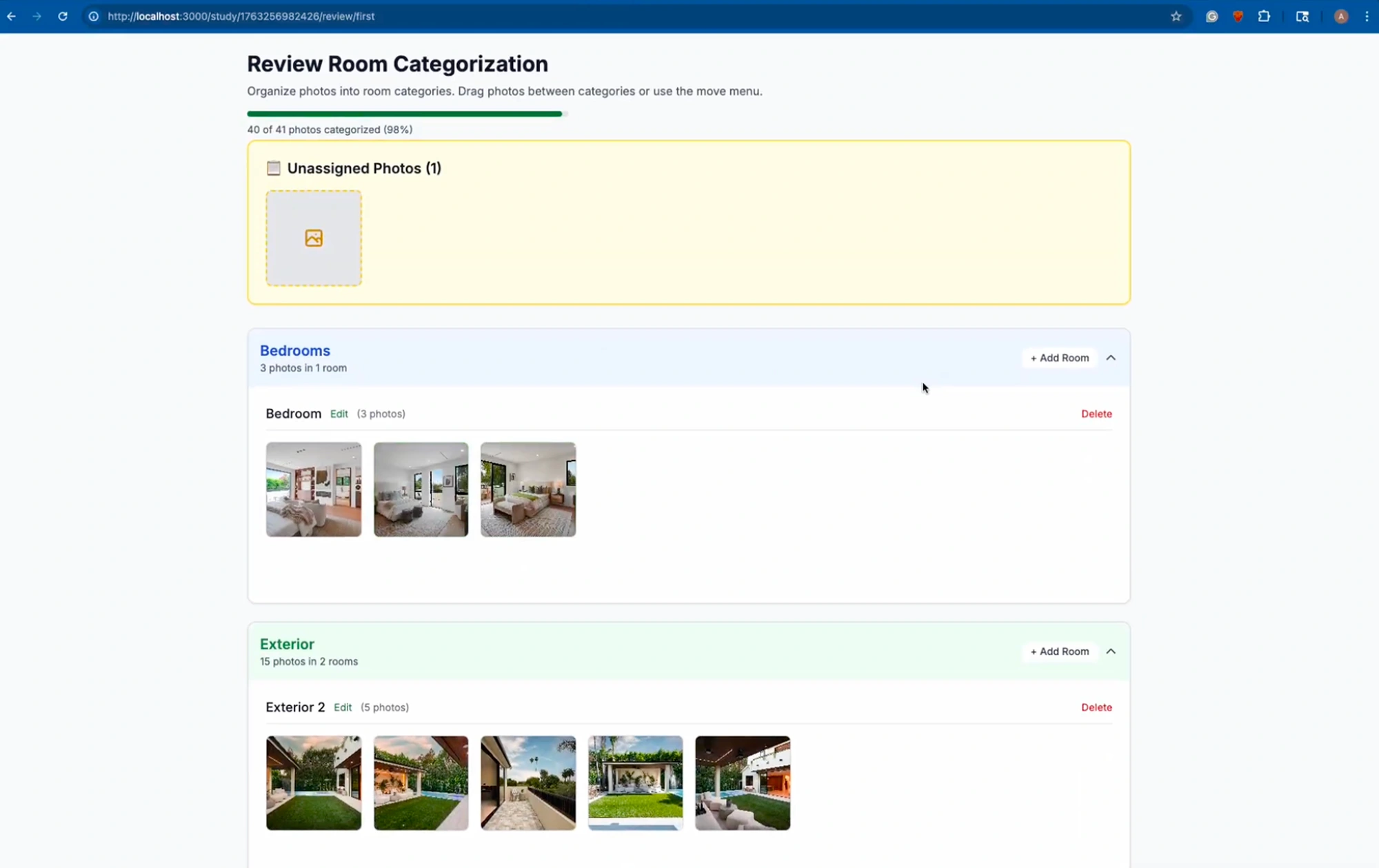
Image organization
From a flat file list to an annotatable image workspace.
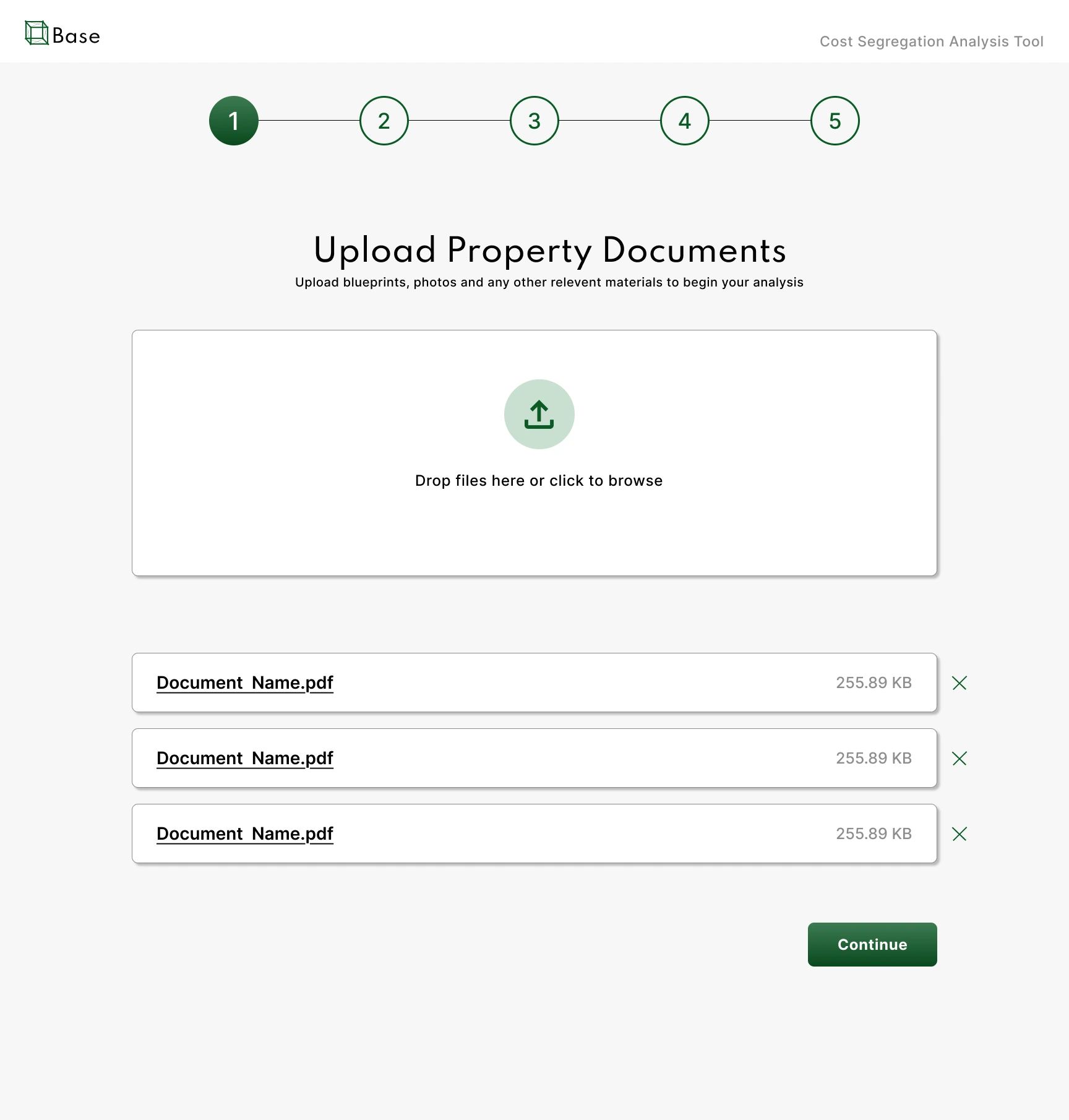
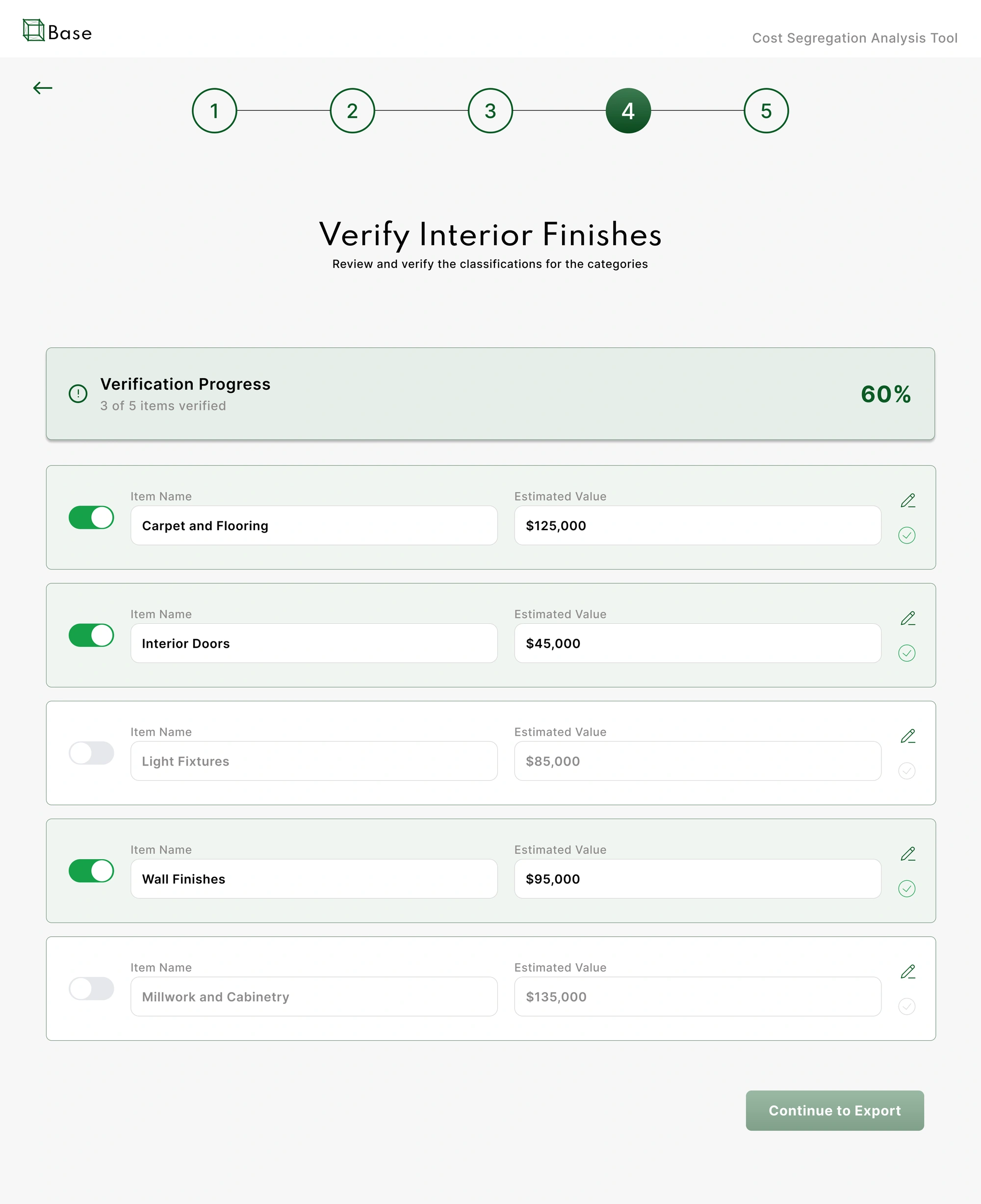
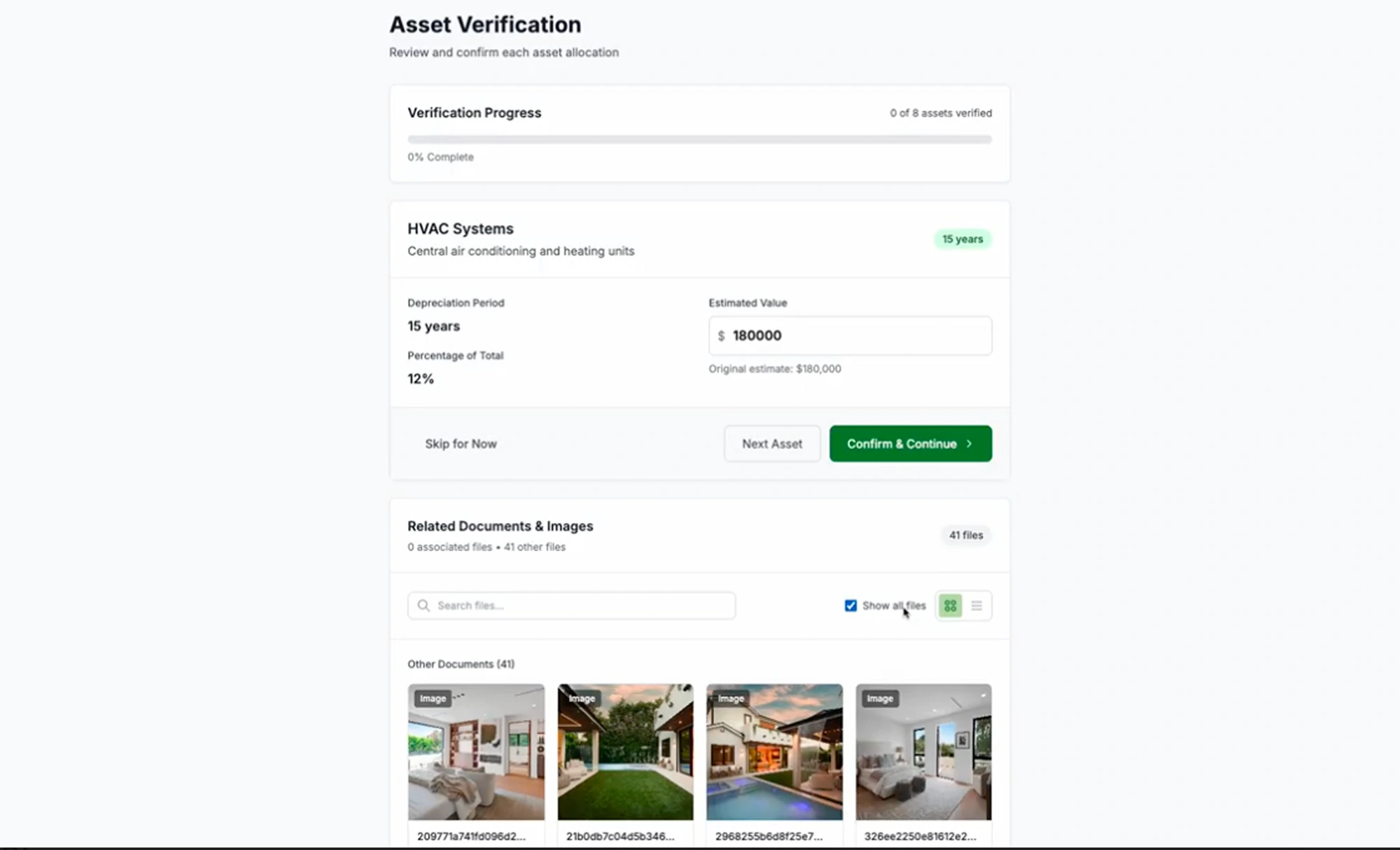
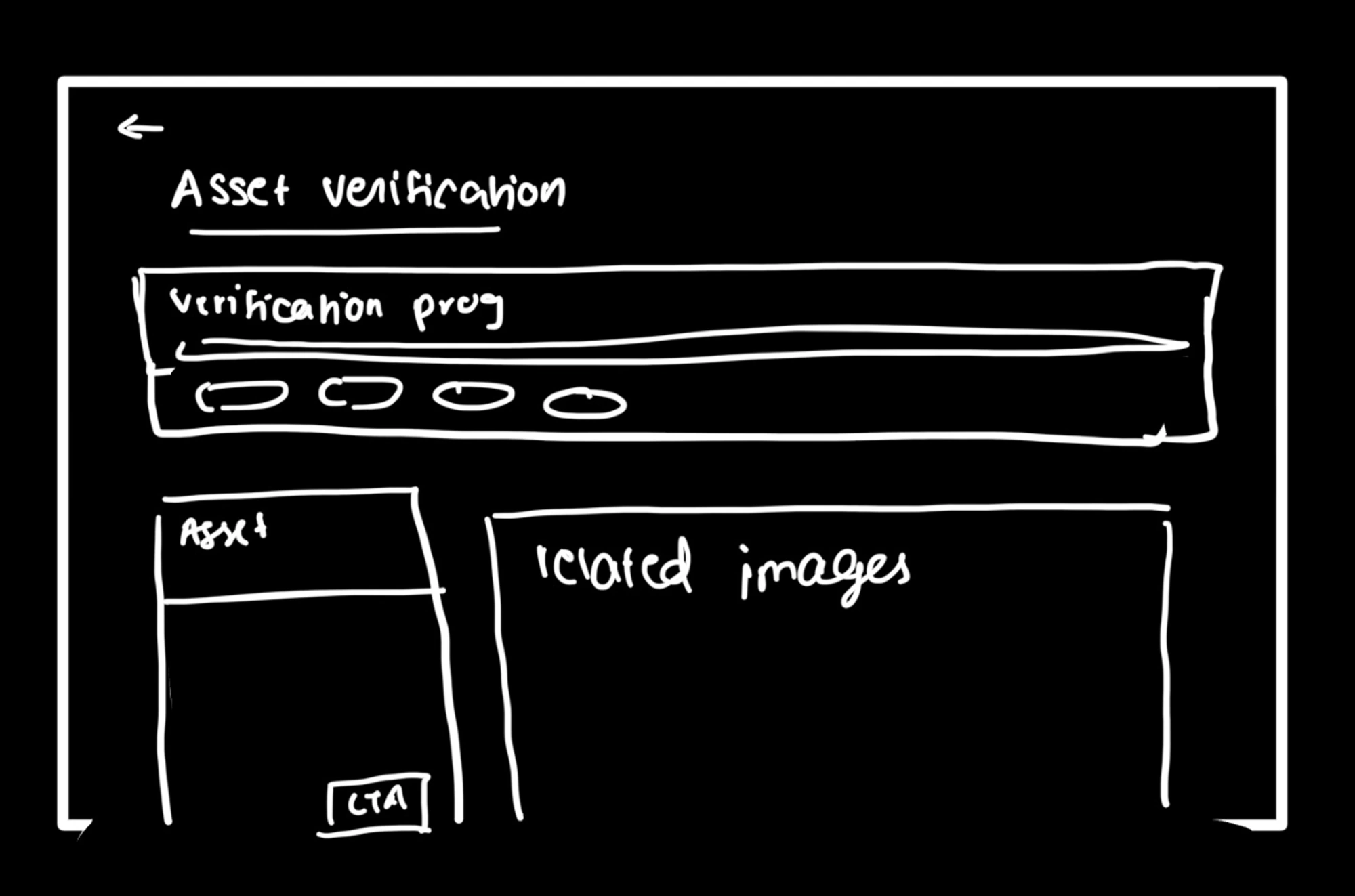
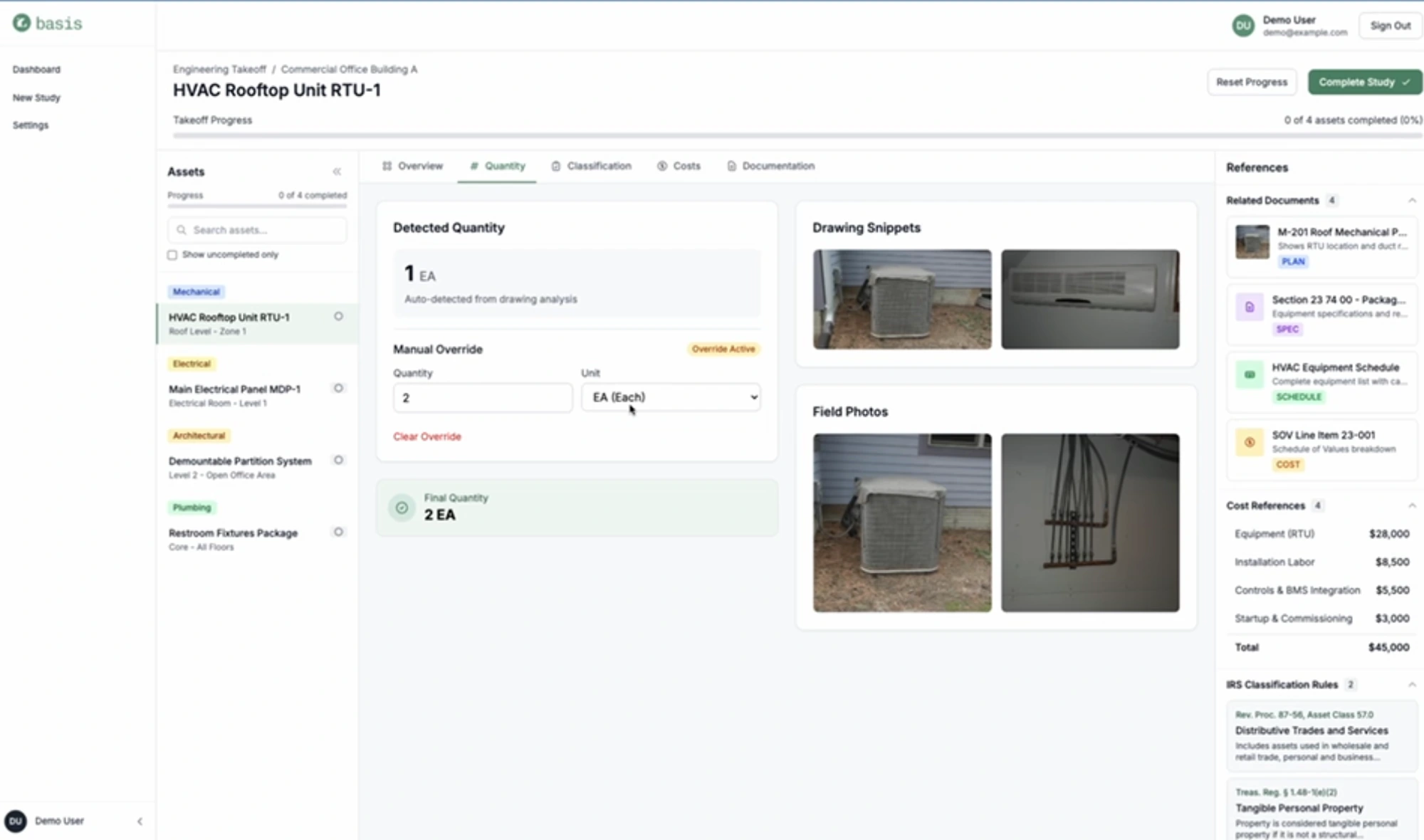
Asset verification
From one asset at a time to a full verification workspace.
Solution
AI does the sorting. The engineer keeps the judgment, and stays visibly in charge.
Basis analyzes property documents and generates structured, traceable asset classifications, built for engineers at small and mid-size firms. Three decisions carry the whole product.
Every classification traces back to the document it came from.
Human in the loop
Review, override, and approval checkpoints at every stage. The engineer is always the final authority, visibly.
One view for everything
Photos, appraisals, sketches, and IRS references in a single interface. No more validating one decision across four tools.
Automate the redundant
Extraction, room classification, evidence organization. AI takes the sorting, engineers keep the judgment.
Takeaways
The most meaningful impact came from focusing on the exact moment engineers lose confidence, when analysis outputs have to be validated and defended. Designing around that moment clarified what actually mattered and what didn't.
V1 assumed AI could do the whole job. Each round of testing broke an assumption, so the final product was a series of forced corrections rather than a leap.
I spent two weeks on branding alone and still almost got it wrong. Typography shapes a product's credibility more than I expected, and a font that feels neutral in isolation can make a B2B tool look untrustworthy to the exact people you are selling to.
This is the short version
Every section here has more behind it: the research, the iterations, the dead ends. If you are interested in the long version, let's get in touch.

Next flight
Process intelligence for banks, and an AI skill for the whole firm
SYNECHRONSE561